
Behind the Yield
The Quiet Fiscal Cliff
The Quiet Fiscal Cliff
The Fed cuts, and the long end yawns. Traders expected a rally. The ten-year yield isn’t fighting back. The ten-year yield isn’t rebellious. Because the ten-year yield is math. And fiscal math isn’t suspended for politics.
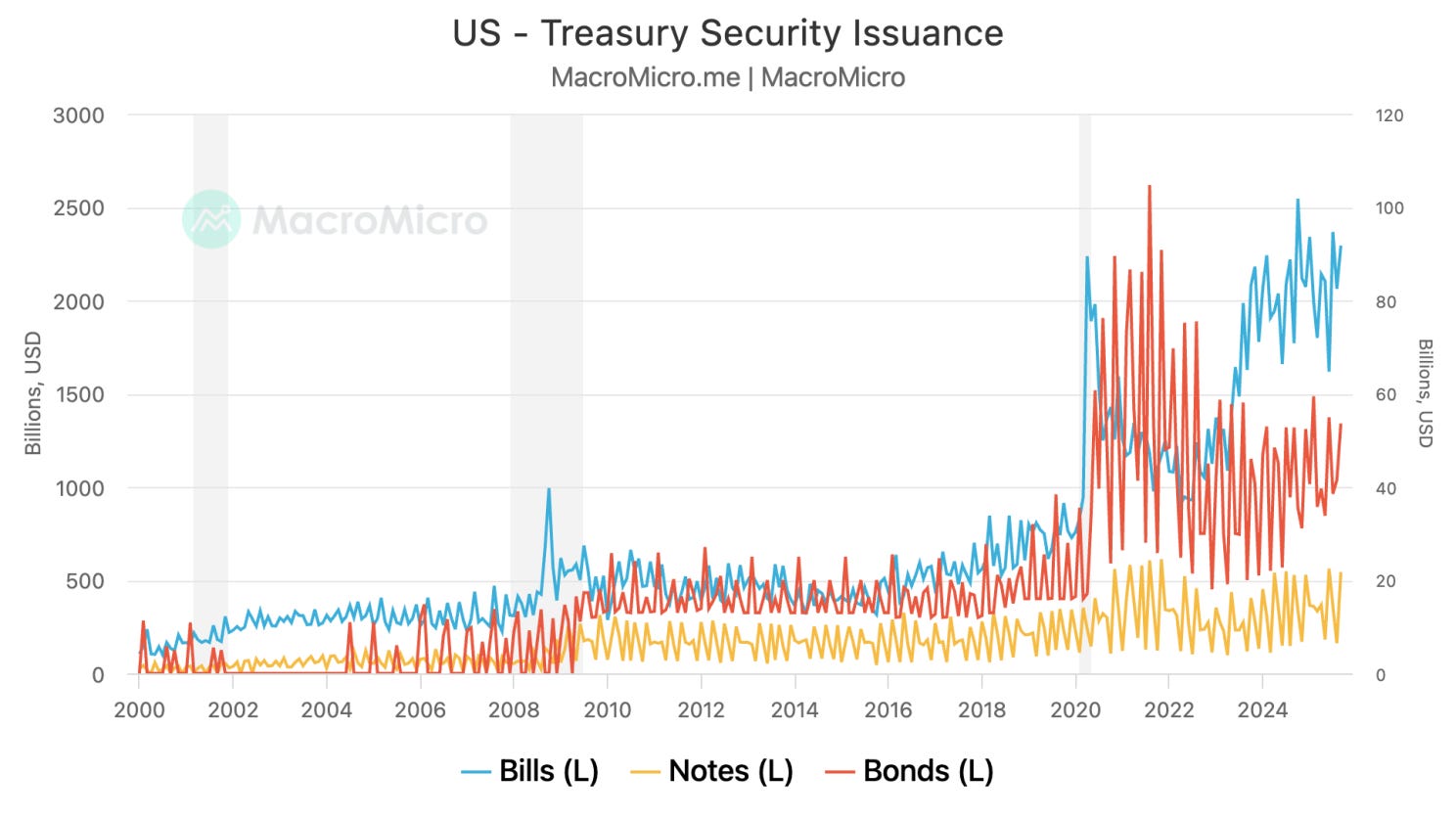
The Treasury faces an enormous amount of debt that comes due every month; this is not new debt, but rather the result of refinancing. Seven trillion dollars’ worth of Treasurys come due per year. These will be reissued at a two- to three-point higher level. This, in itself, increases interest expense line items by $150 to $200 billion annually for the federal budget. It’s a fiscal concern that compounds.
This is the true fiscal cliff. Not a default. Not a downgrade, but a modest repricing of what it costs America to fund itself moving forward. For years, Treasurys stood as the anchor of credibility and enjoyed seemingly limitless demand.
Investors want payment for fiscal drift. The term premium has re-emerged.
Long-term yields are less dictated by Jerome Powell and more by the Treasury. Where monetary policy can adjust interest rates downward, fiscal policy trumps supply concerns. For every bond that is rolled over and issued anew, there needs to be a buyer. That buyer wants a little more for their troubles. There’s no disaster. There’s an adjustment. The market is treating the government like a big corporation, one with plenty of stability, but also plenty of debt, and it wants its yield to reflect the real-time refinancing risk.
The takeaway for advisors is this: Clients hear cuts at the Fed and anticipate lower yields. They scratch their heads when they see higher yields and they’ve lost sight of what’s happened on the supply side of the bond market. The market is now pricing the math, not the message.
This is where structure becomes strategy. A controlled ladder or barbell allows the advisor to own this cycle, rather than play catch-up with it. The short bonds provide income generation and flexibility. The long end brings ballast and compounding back to the portfolio. The middle connects them, a reinvestment space where cash flow needs and duration risk are offset, all without the need for compromising stability.
It’s not the time to speculate on direction. It’s to educate based on what has already happened, a market that has been re-priced through fiscal math rather than policy storytelling.
The Clarity Point: Fiscal rollover is the new rate risk. The market isn’t fighting the Fed. It’s discounting the math
Get Behind the Yield free by email. Short enough to read before your first meeting, specific enough to use in it. Subscribe here.
Need CE hours? Six self-study bond courses, accepted by CFP Board. See the courses.