
Behind the Yield
When Credibility Becomes Currency
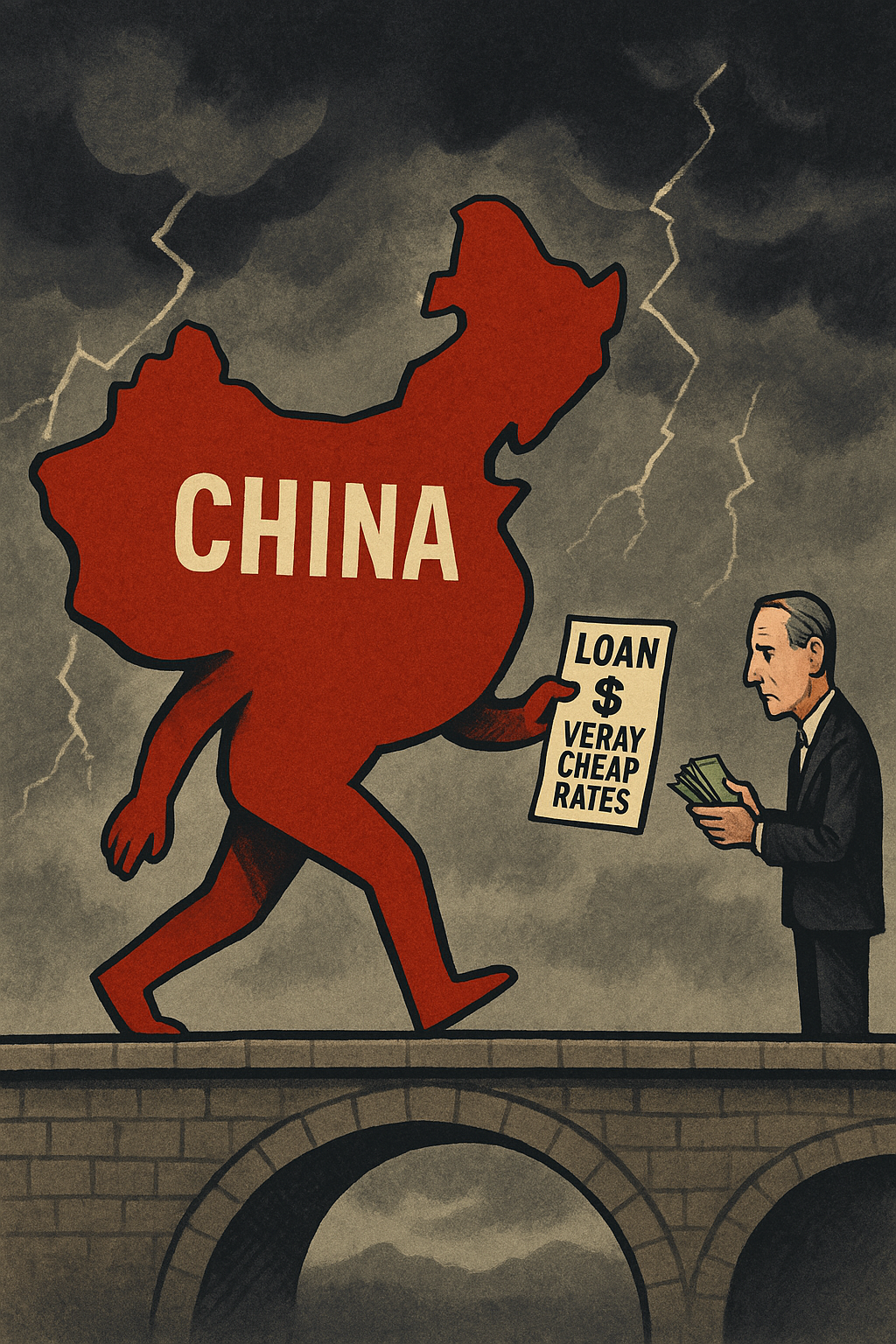
A $4 Billion Bond Deal by China and the New Face of Sovereign Trust
Beijing returned to the global marketplace last week for a four-billion-dollar bond deal that turned heads for one reason: the pricing.
China’s Ministry of Finance issued dollar-denominated bonds that are almost comparable to U.S. Treasuries: 3.64 percent for the three-year tranche and 3.78 percent for the five-year tranche, which is slightly higher than the U.S. offerings for the same maturity. For an internationally deemed “emerging” country, such pricing once seemed far-fetched.
The demand was exorbitant, with over sixty-five billion dollars requested, suggesting that international investors were more than willing to lend money to China, denominated in dollars at near-Treasury pricing, sixteen times over. The deal was facilitated through Hong Kong, underscoring the financial hub as the East-West bridge and China’s continued access to international liquidity.
Reading Between the Yields
It’s not the fundraising that’s the message. It’s credibility.
Investors have just told the world that China’s creditworthiness is nearly as good as America’s, at least, on short maturities. That doesn’t mean they’re equal; it means they’re comfortable with repayment ability and willingness to do so.
In fixed income, credibility is everything. The fact that China can borrow at Treasury rates in the midst of a property crisis, with growth decelerating and capital controls in place, speaks volumes about what investors are willing to overlook for the sake of stability.
Furthermore, it speaks volumes about what’s going on out there. Global liquidity exists, even if growth doesn’t. The same investors who were fighting for a piece of private credit allocations up in New York last month are now waiting in line for Chinese sovereign debt.
This isn’t even necessarily about China, but about what investors crave - income, stability, and a sense of safety in a world that is otherwise too rich for comfort.
The End of Easy Labels
For years, the bond markets shorthand was easy: developed equals safe, emerging equals risky. That paradigm is shifting.
When a so-called emerging market can borrow at virtually the same cost as the largest economy in the world, it suggests that the “risk-free rate” isn’t as risk-free as we like to believe. This means that sovereign credibility is more relative now, based upon perceptions of fiscal stance and political will, than growth or inflation.
That doesn’t mean China is a safe place to put your money. It means that investors are redefining what safe even is. Safe for some is something backed by vast reserves and stringent control. Safe for others is exposure to economies that still seem operational in a fractious world.
Regardless, the delineation of sovereign risk no longer exists. The U.S. is still the comparison to beat, but it’s closing in on narrower margins, albeit not because the U.S. has faltered but because others have come up to speed in their borrowing discipline.
Tactical Clarity
But advisors shouldn’t necessarily chase China’s issuance. Instead, this presents an opportunity to reposition the client’s perception of bonds and the integrity of international trust.
The yield curve is no longer a domestic scoreboard, but instead, a vessel reflecting the price of capital via credibility across borders.
It’s still worth locking in income. U.S. yields may stabilize in the 4.5 to 5 percent range, and advisors have the opportunity to lock in a sustainable cash flow without the need to guess which way interest rates may move.
Structuring beats speculation. Laddered and barbell portfolios offer optionality regardless of the interest rate trajectory and help mitigate reinvestment risk once the global economic cycle resumes.
Selection within credit also matters. BBB spreads are still narrow, and quiet markets are often the worst kind. Confidence can erode within seconds, and liquidity flees before anyone can even acknowledge it’s gone.
When clients wonder why bonds are still a good idea, remind them that billions were just lent to China at a yield similar to that of the United States. Bonds aren’t just a numbers game; they’re how the world plays a game of credibility.
The Bigger Picture
The world’s fixed-income markets are slowly readjusting based on trust rather than borders.
China’s $4 billion bond offering isn’t an indicator that a rival safe asset has emerged. It’s merely a re-pricing of confidence. From Tokyo to London to Washington, investors caution all political leaders that fiscal credibility comes with a premium, even if politics and growth aren’t on their side.
Same goes for Washington. You can cut rates and flood liquidity, but you can’t manufacture confidence. That’s earned, not printed.
For investors and their advisors, this is the new playing field, one where credibility isn’t taken for granted, but valued each day, and arguably one of the best in a decade for those who still believe in income, transparency, and control as true sources of return.
Get Behind the Yield free by email. Short enough to read before your first meeting, specific enough to use in it. Subscribe here.
Need CE hours? Six self-study bond courses, accepted by CFP Board. See the courses.