Fixed Income Resources logo
  • Work With Me
    • Consulting for Fixed Income Companies
    • Bond Training for Advisor Firms
    • Speaking
  • Writing
  • About
  • Contact
  • Free Tools
    • Bond Calculators
    • Bond IQ Quiz
    • What to Tell Clients
    • Muni Tax Cheat Sheet
    • Ask Chuck
    • Client Handouts
  • Short Video Explainers
    • Private Credit, Explained
    • Bonds vs. Bond Funds, Explained
    • Why Bond Prices Fall, Explained
    • Munis and Tax-Equivalent Yield
    • T-Bills, CDs and Money Funds
  • CE Accepted Bond Courses
  • Sign in

Pages

  • Home
  • Consulting for Companies
  • Training for Advisor Firms
  • Writing
  • About
  • Contact

Free Tools

  • Bond IQ Quiz
  • Bond Calculators
  • What to Tell Clients
  • Muni Tax Cheat Sheet
  • Ask Chuck

Policy Pages

  • Privacy Policy
  • Terms & Conditions
  • Cookie Policy
Copyright © 2026
Certified Financial Planner Board of Standards Center for Financial Planning, Inc. (CFP Board Center) owns and licenses to Certified Financial Planner Board of Standards, Inc. (CFP Board) the CFP BOARD® service mark. Any marks owned by CFP Board Center and licensed to CFP Board are used with permission.
Login or sign up to start learning Login to start learning
Start learning
or

Create Accounta new account for free
Forgot your password?
Sign up to Fixed Income Resources!
or
click to upload avatar
I accept the Terms & Conditions *
I would like to receive news, tips and tricks, and other promotional material
Sign in with your account
Forgot your password?
or
Get a brand new password!

Enter your brand new password

For advisors · Free to use

Share these with your clients

Five short videos on the questions clients ask most, each with a one-page handout. Add your name, then print the handout or save it as a PDF to send.

1. Add your nameIt prints at the top of every handout, so the client knows it came from you.
2. Pick a topicSend the video link, hand over the page, or both. Each covers one question in about three minutes.
3. Print or save as PDFUse “Print or save PDF,” then choose Save as PDF to email it.

3:39 video + 1-page handout

Private credit, explained

What it is, why it pays more, and what you give up for the yield.

Watch

2:55 video + 1-page handout

Bonds vs. bond funds, explained

A bond has a finish line. A fund doesn’t. What that means for you.

Watch

2:32 video + 1-page handout

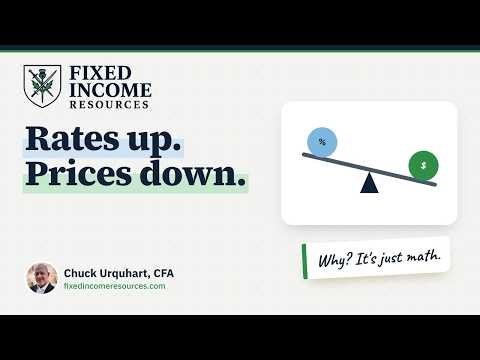
Why bond prices fall when rates rise

The rates-and-prices seesaw, and how far duration says a price will move.

Watch

2:29 video + 1-page handout

Munis and tax-equivalent yield

How to compare a tax-free muni with a taxable bond, and why your bracket decides.

Watch

3:08 video + 1-page handout

T-bills, CDs and money funds

Three safe places to park cash, and how they differ on tax, protection and access.

Watch

The handouts are educational and aren’t investment, tax or legal advice. Check them against your firm’s policy on third-party materials before you share them. Want them with your firm’s name and logo, or a version for your whole team? Ask me.

Fixed Income Resources
Shared by

Private credit, in plain English

A loan you can’t sell on Monday. What it is, why it pays more, and what you give up.

What it is

A fund lends money directly to a company and holds the loan. There’s no exchange and no daily price, just a lender and a borrower.

Who borrows

Mostly mid-sized companies, many owned by private equity firms. The loans usually float, so the interest rises and falls with rates.

Why it pays more

You’re paid for three things: the base interest rate, extra yield for lending to riskier companies, and the fact that you can’t sell when you want to.

How investors own it

Mostly through non-traded BDCs and interval funds. You buy in at the fund’s stated value and get a monthly payout. The fund buys shares back on a schedule, often once a quarter and usually up to 5% of the fund.

The trade-offs

What to know
Getting outIf many investors ask to sell at once, the fund can cap what it buys back. You may get only part of your money when you want it.
The priceThe manager values the loans, not the market. The price can look steadier than the loans really are.
The costManagement fees, incentive fees and share class fees stack up. Published index returns are before those fees.

Questions to talk through with your advisor

  1. How do I get out, and what happened the last time everyone wanted out?
  2. Who sets the price?
  3. What does it cost, all in?
  4. Is the payout covered by cash the loans actually paid, or by new money coming in?
QR code
Watch the 3-minute video
Scan with your phone camera, or go to fixedincomeresources.com/private-credit-explained
Prepared by Charles Urquhart, CFA, Fixed Income Resources. For education only. Not investment, tax or legal advice. Examples are illustrative; check current rates and your own situation with your advisor.
Fixed Income Resources
Shared by

Individual bonds or a bond fund?

A bond has a finish line. A fund doesn’t. Here’s what each one does better.

Individual bondsBond fund
Pays you back on a set dateYes, unless the issuer defaultsNo. Most funds never mature
When rates risePrice drops, then drifts back toward full value as maturity nearsPrice drops; income rises as the fund reinvests at higher yields
Spreading out riskTakes real money to own enough issuersHundreds or thousands of bonds in one purchase
SellingSelling before maturity can cost youSell any business day at that day’s price
CostsNo annual fee; trading costs when you buyAn annual fee; index bond funds can be very low
ControlYou pick the issuers, the dates and when to take a tax lossThe fund manager decides

The middle path: a ladder

Own bonds that come due one each year. When one matures, spend it or reinvest it at the rates of the day. You keep the finish lines and still reinvest steadily, much like a fund.

Questions to talk through with your advisor

  1. When do I need this money? Is there a date, or is it someday?
  2. How much am I investing?
  3. Might I need to sell before maturity?
  4. What does each choice cost, all in?
QR code
Watch the 3-minute video
Scan with your phone camera, or go to fixedincomeresources.com/bonds-vs-bond-funds
Prepared by Charles Urquhart, CFA, Fixed Income Resources. For education only. Not investment, tax or legal advice. Examples are illustrative; check current rates and your own situation with your advisor.
Fixed Income Resources
Shared by

Why bond prices fall when rates rise

Rates up, prices down. Rates down, prices up. Duration tells you how much.

Why it happens

Say you own a 10-year bond paying 3%, or $30 a year on $1,000. Then new bonds pay 4%, or $40. Nobody pays a full $1,000 for $30 a year, so your bond’s price falls to about $920, where a buyer earns about 4% either way.

It works in reverse

If rates fall to 2%, that same 3% bond looks good. Buyers will pay about $1,090 for it. That’s why bonds rally when rates fall.

How far: duration

A rough rule: for each 1-point rise in rates, a bond’s price falls by about its duration, in percent. A duration of 6 means about a 6% drop.

The good news

Hold a bond to maturity and, if the issuer doesn’t default, you get the full $1,000 back. The drop is only locked in if you sell, and new money earns the higher rates.

Longer bonds move more

BondPrice change if rates rise 1 point
2-yearAbout −2%
10-yearAbout −8%
30-yearAbout −15%

Questions to talk through with your advisor

  1. How long are my bonds? That tells me how much they’ll move.
  2. Will I hold them to maturity, or might I need to sell?
  3. Where does my new money go, at today’s rates?
QR code
Watch the 3-minute video
Scan with your phone camera, or go to fixedincomeresources.com/why-bond-prices-fall
Prepared by Charles Urquhart, CFA, Fixed Income Resources. For education only. Not investment, tax or legal advice. Examples are illustrative; check current rates and your own situation with your advisor.
Fixed Income Resources
Shared by

Munis and tax-equivalent yield

Don’t compare yields. Compare what you keep.

What a muni is

A loan to a state, a city or a public project, like a school or a water system. The interest is usually free from federal income tax, and often from state tax if the muni is from your own state.

The formula

Tax-equivalent yield = muni yield ÷ (1 − your tax rate). It’s the taxable yield you’d need to keep the same money after tax.

A 3.5% muni vs. a 5% taxable bond

Federal bracketThe muni is like a taxable bond payingWhich wins
24%About 4.6%The taxable bond
32%About 5.15%The muni
37% + 3.8% investment income taxAbout 5.9%The muni, easily

State tax

In many states, munis from your own state skip state income tax too, which pushes the tax-equivalent yield higher. Out-of-state munis are usually taxed by your state.

Retirement accounts

In an IRA or other retirement account, the tax break is wasted. A taxable bond usually makes more sense there.

Questions to talk through with your advisor

  1. What’s my federal bracket on my top dollar?
  2. Do I pay state income tax, and is the muni from my state?
  3. Is this money in an IRA or other retirement account?
QR code
Watch the 3-minute video
Scan with your phone camera, or go to fixedincomeresources.com/munis-tax-equivalent-yield
Prepared by Charles Urquhart, CFA, Fixed Income Resources. For education only. Not investment, tax or legal advice. Examples are illustrative; check current rates and your own situation with your advisor.
Fixed Income Resources
Shared by

T-bills, CDs and money funds

Three safe places to park cash, with different rules on tax, protection and access.

T-billCDMoney market fund
What it isA loan to the U.S. government for a year or lessA deposit at a bank for a set termA mutual fund that holds very short-term debt
ProtectionBacked by the full faith and credit of the United StatesFDIC insured up to $250,000 per depositor, per bank, per ownership categoryNot FDIC insured; aims to keep a $1.00 share price
State and local income taxFreeTaxedPart may be free, depending on the fund and your state
Getting your moneySell any day the market is openBank CD: early-withdrawal penalty. Brokered CD: sell at the market price, which may be less than you paidAny business day
Your rateLocked until it maturesLocked for the termChanges every day

The state tax edge, in one example

A T-bill pays 4.2% and you pay 6% state income tax. A CD would need to pay about 4.47% to leave you the same after tax (4.2 ÷ (1 − 0.06)). In a high-tax state, the gap is bigger. All three are taxed federally.

Lock it or float it

A money fund’s yield floats, so its income can drop within weeks of a Fed cut. A T-bill or CD locks in today’s rate. Locking in helps when rates fall and costs you when rates rise. A short ladder of bills or CDs splits the difference.

Questions to talk through with your advisor

  1. When do I need the money? Any day, or on a set date?
  2. How much is going in, and is it over the FDIC limit at one bank?
  3. What state do I pay income tax in?
QR code
Watch the 3-minute video
Scan with your phone camera, or go to fixedincomeresources.com/where-to-park-cash
Prepared by Charles Urquhart, CFA, Fixed Income Resources. For education only. Not investment, tax or legal advice. Examples are illustrative; check current rates and your own situation with your advisor.